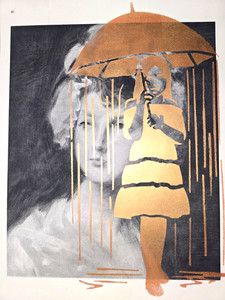
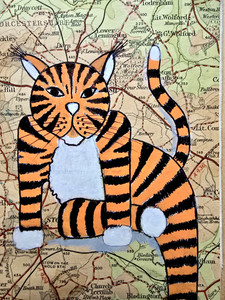
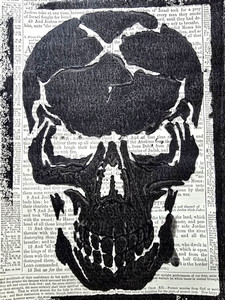
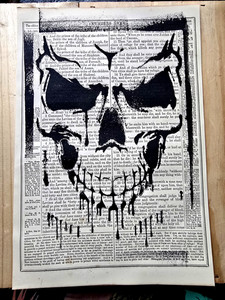
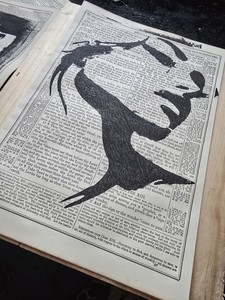
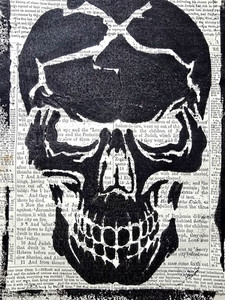
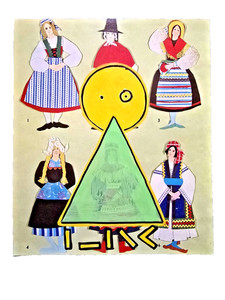
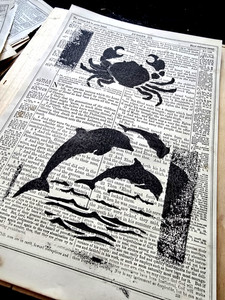
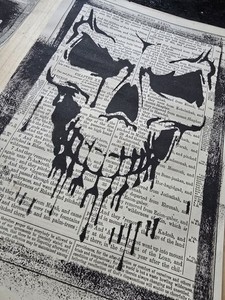
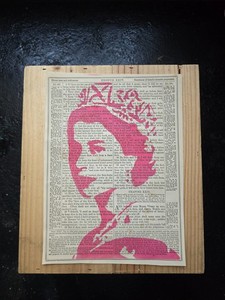
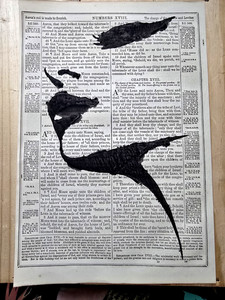
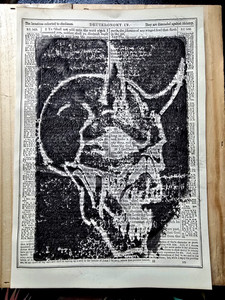
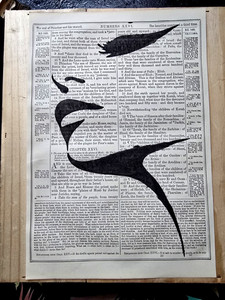
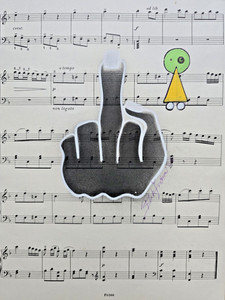
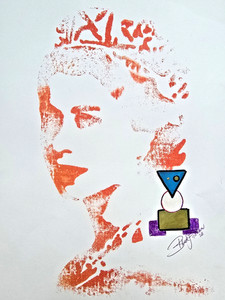
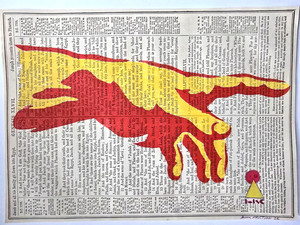
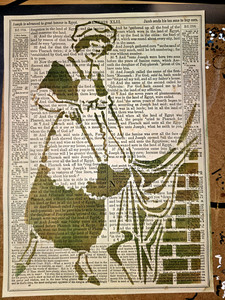
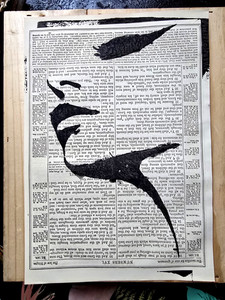
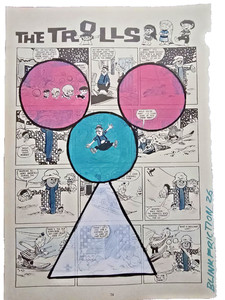
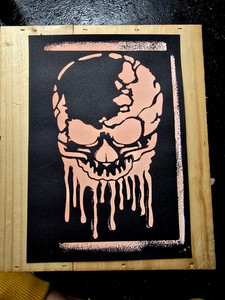
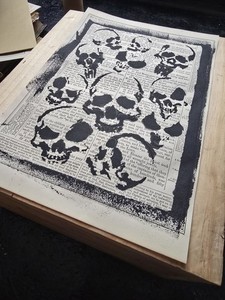
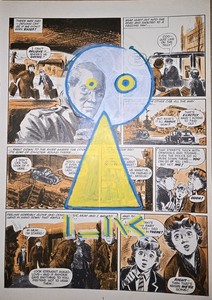
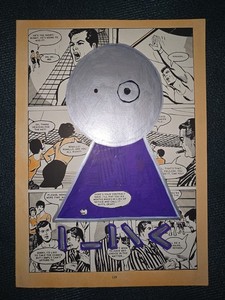
Embedded throughout Radical Ephemera are elements from the Blink Friction Sigil System — a developing visual language that functions as both mark-making and meaning. These sigils are not decorative motifs; they operate as symbolic residues, recurring across works in altered forms, scales, and contexts.
Each sigil is intentionally open-coded rather than fixed, designed to shift meaning depending on its placement, orientation, and relationship to the reclaimed surface beneath it.
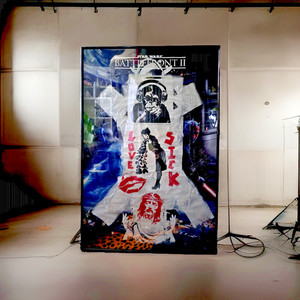
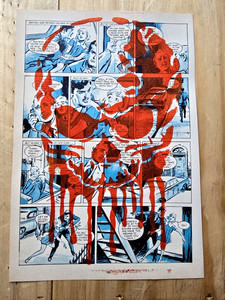
In this work, the sigils reference:
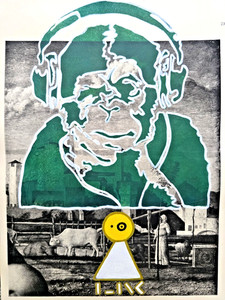
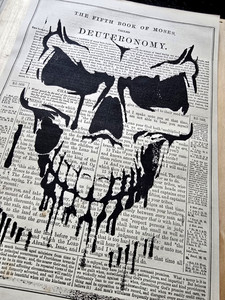
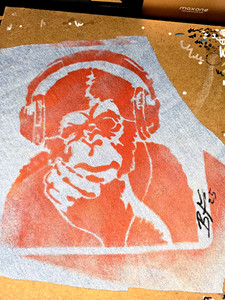
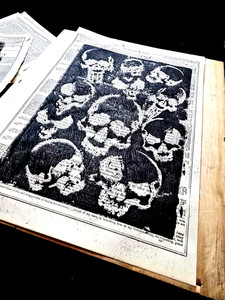
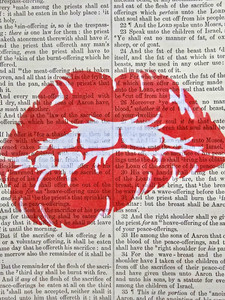
• Transmission & Interference — headphones, mouths, and fractured text suggest the overload of broadcast culture and the distortion of intimacy in mass media
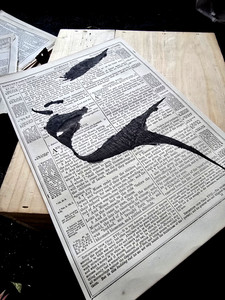
• Consumption & Shedding — the falling heart-forms imply emotional depletion, desire commodified, or belief systems breaking away from the body
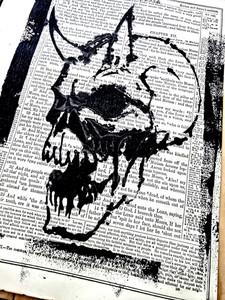
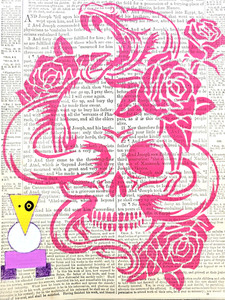
• Faith, Icon, and Collapse — the raw religious imagery is treated as a cultural artifact rather than doctrine, positioned alongside pop spectacle to question what society venerates, discards, or repurposes
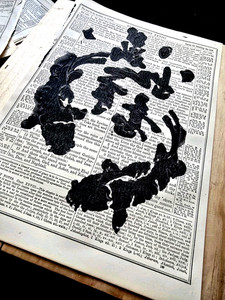
• Repair & Resistance — the cross-like field of torn white paper echoes emergency repair, protest wheat-pasting, and ritual covering, reinforcing the ethos of salvage and survival
The sigils act as anchors — visually arresting points that recur across the Blink Friction ecosystem, allowing viewers who look deeper to trace connections between works, eras, and contributors.
⸻
Authorship & Continuity
While FRIX operates as a distinct artist identity within Blink Friction, the Sigil System provides continuity across the wider project. Introduced at the launch of Blink Friction in 2020 by Sarnia de la Maré, the sigils form part of the project’s foundational language — one that allows multiple creators to contribute while preserving a coherent ethical and visual spine.
As Blink Friction evolves, sigils may be reinterpreted, fragmented, or obscured, but their presence signals participation in a shared lineage:
radical reuse, cultural interrogation, and eco-conscious creation through reclaimed matter.
Collectors encountering early FRIX works are therefore acquiring not only a singular artwork, but a piece of the formative visual grammar of the Blink Friction project.
£260.70

£7.590 bids6d 23h 4m

£7.590 bids6d 23h 34m

£7.590 bids6d 22h 44m
£7.590 bids6d 22h 48m

£7.590 bids6d 22h 39m

£7.590 bids6d 23h 26m

£7.590 bids6d 23h 30m

£7.590 bids6d 23h 8m
£7.590 bids6d 23h 2m
£7.590 bids6d 22h 52m

£7.590 bids6d 23h 23m
£7.590 bids6d 22h 59m
£7.590 bids6d 22h 57m
£7.590 bids6d 22h 0m

£7.590 bids6d 22h 55m
£7.590 bids6d 22h 37m
£10.790 bids1d 1h 45m
£10.790 bids1d 2h 34m
£10.790 bids1d 2h 26m
£10.790 bids1d 1h 57m

£10.79
£10.79

£10.79
£10.79

£10.79

£10.79
£10.79
£10.79
£10.79

£10.79
£10.79
£10.790 bids1d 1h 53m
£10.790 bids1d 2h 23m

£10.79
£10.790 bids6d 18h 24m
£10.79
£10.790 bids1d 1h 50m
£10.790 bids1d 2h 1m
£10.79
£10.790 bids6d 18h 32m
£10.79

£10.79
£5.440 bids2d 4h 8m

£5.440 bids2d 4h 5m
£5.440 bids2d 3h 59m
£5.440 bids1d 23h 48m
£10.79
All items
£10.79
£5.440 bids2d 2h 37m
£10.79
£10.79
£10.790 bids6d 17h 11m
£10.79
£10.79
£10.79
£10.79
£10.79
£10.79
£10.79
£5.440 bids2d 2h 50m
£5.440 bids2d 2h 51m
£10.79

£10.79
£5.440 bids1d 22h 28m
£10.790 bids6d 17h 8m
£10.79

£10.79
£10.79
£10.790 bids6d 17h 3m
£10.79
£10.79
£10.79

£10.79
£10.79
£10.79
£10.79

£10.79
£10.79

£10.79
£10.79
£10.79
£10.79
£10.79
£10.79
£10.79
£10.79
£10.79

£10.79
£10.79
£10.79